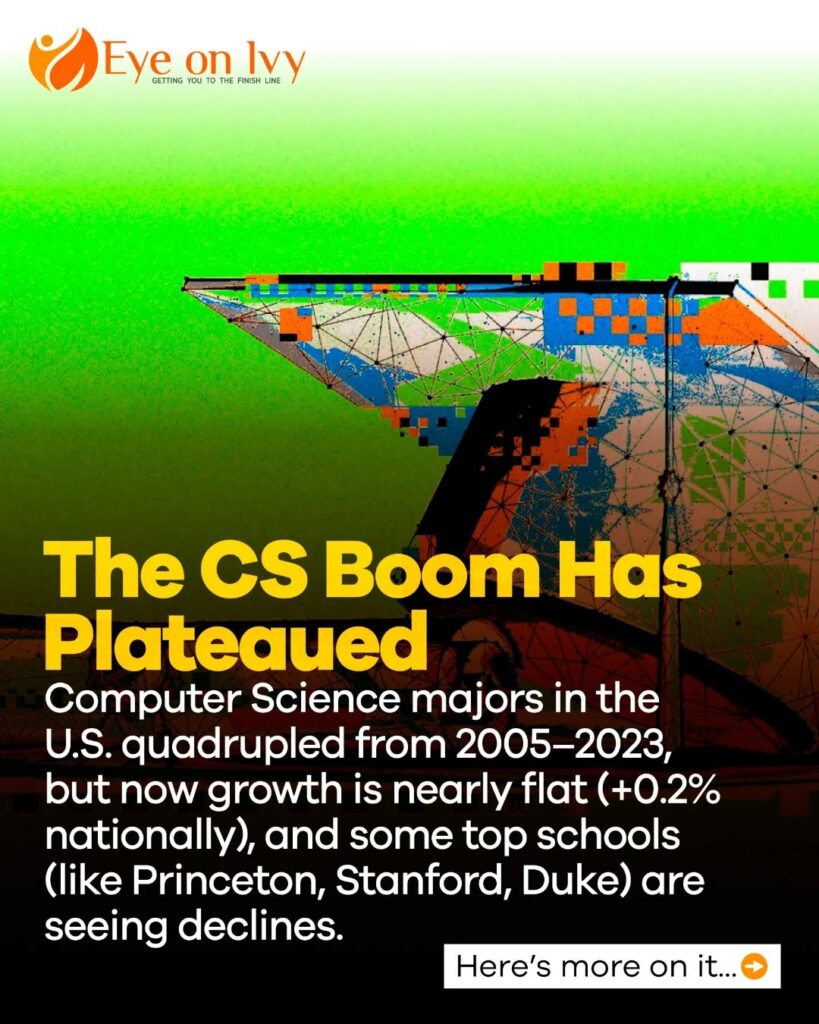

The once-booming demand for computer science degrees is beginning to cool—even at top institutions like Stanford and Princeton, where CS enrollments have started to plateau. Meanwhile, the AI revolution is accelerating, transforming how technology is created—and who’s needed to create it.
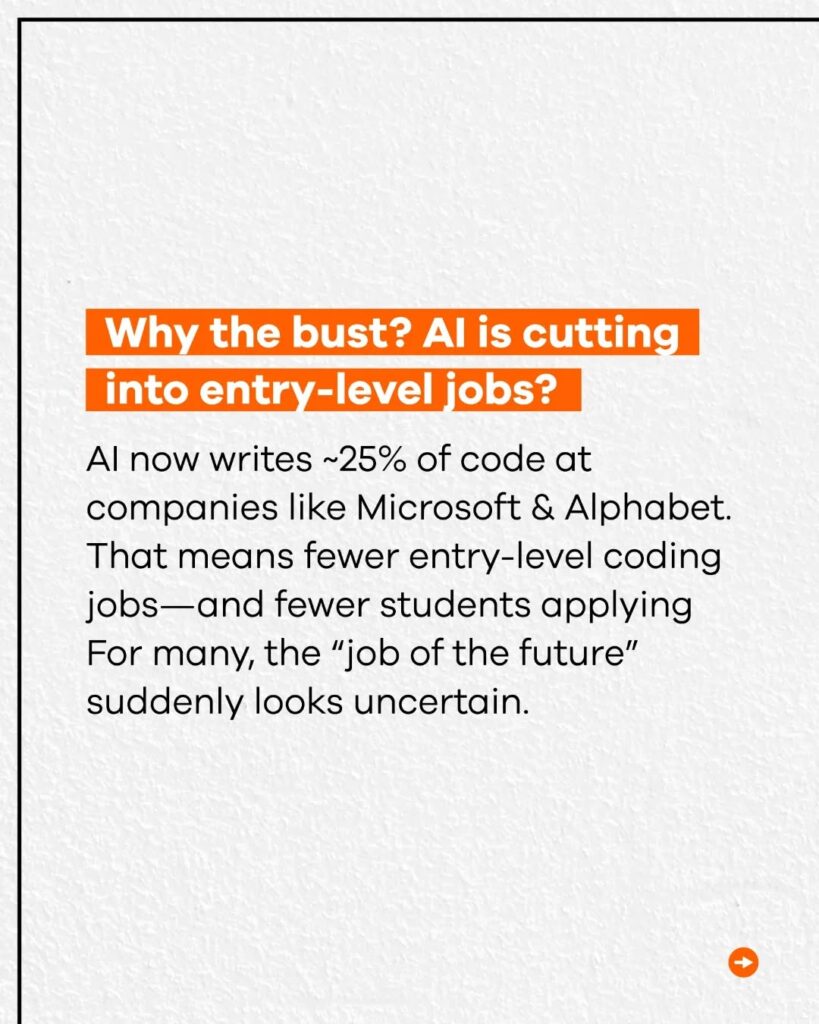
Tech giants like Microsoft and Alphabet now use AI to write nearly 25% of their code, automating many routine tasks. As a result, entry-level programming jobs are shrinking, and the role of the human coder is evolving.
So what’s the smart move for students?
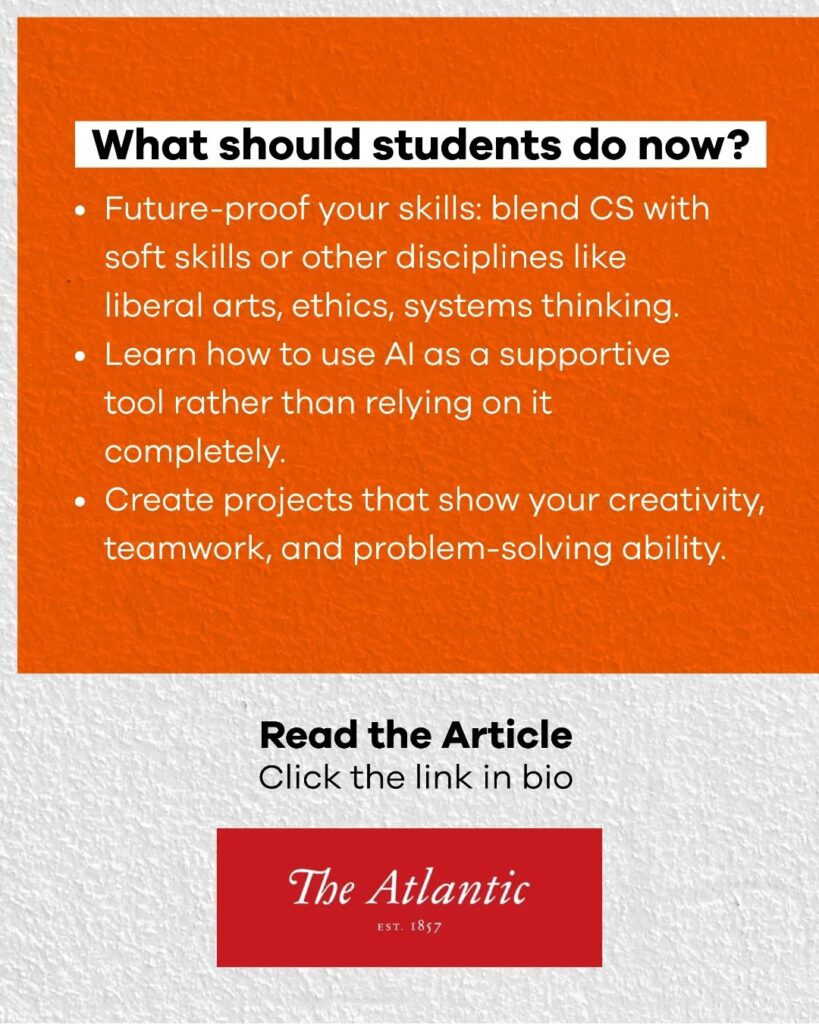
🔹 Blend CS with soft skills. Pairing technical knowledge with communication, empathy, and systems thinking makes students more adaptable and future-ready.
🔹 Use AI as a tool—not the destination. Mastering how to work with AI creatively and ethically will be more valuable than just understanding its mechanics.
🔹 Build a portfolio that highlights creativity and judgment. As automation increases, human insight and originality become key differentiators.
The takeaway? Tech skills still matter, but it’s the hybrid thinkers—those who can code and communicate, automate and analyze—who will shape the next wave of innovation.